Okay, so check this out—Solana moves fast. Really fast. Whoa! My first impression when I started digging into Solana explorers was that everything felt lightning-quick but a little… messy. Initially I thought the block explorers were mostly for devs and traders, but then I realized they’re the single best lens for ordinary users to verify activity, track NFTs, and troubleshoot transactions when wallets hiccup. Hmm… somethin’ about that immediacy stuck with me.
Explorers are the viewports into the ledger. Short, clear snapshots of what happened on-chain. They show signatures, confirmations, fee details, and token transfers. On Solana that means you can see SOL movements, SPL token swaps, stake operations, and the metadata spine for NFTs. My instinct said “trust the tools” but I learned to cross-check—because UX can hide nuance and sometimes a transaction that says “confirmed” still needs another look.
Here’s the thing. A standard Solana explorer will list a transaction by signature and then break it down. Medium-level explanation: you get which accounts were touched, pre- and post-balances for each account, logs emitted by programs, and compute units consumed. Long, more complex thought coming: because Solana is parallelized (via Sealevel) and programs can operate across many accounts at once, a single transaction can simultaneously update dozens of accounts, and an explorer helps you trace that web so you understand not just what moved, but why gas or compute usage spiked.
When I first started tracking NFTs I was naive. Seriously? I thought metadata was always on-chain. Actually, wait—let me rephrase that: a lot of NFT metadata lives off-chain, and the explorer will often link to a URI. So you have to inspect both layers. On one hand you get the on-chain authority and token mint info; on the other, you might be redirected to an IPFS hash or a web-hosted JSON that could vanish. On the whole, that duality is what makes Solana NFT tracking interesting—and a little fragile.
Why pick a specific explorer, and how I use it
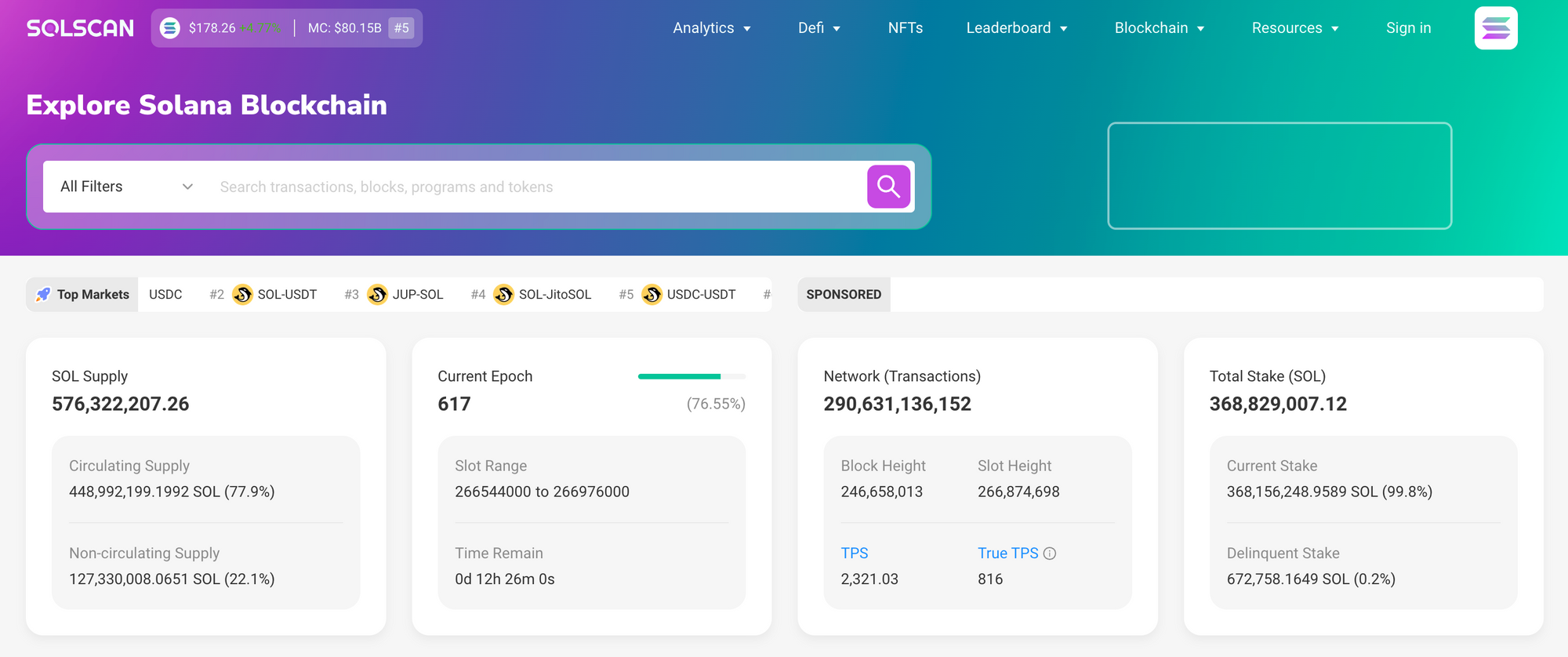
I’m biased toward explorers that balance detail with speed. The solscan explorer official site is one I recommend when I want a no-nonsense, fast summary plus accessible NFT tabs. Short: it loads quick. Medium: it surfaces token transfers, program logs, and NFT metadata in tabs you can click through. Longer thought: when you’re diagnosing an odd transfer or trying to confirm a mint, the ability to toggle between pure transaction logs and token-specific views saves time and reduces guesswork, especially if you’re in the middle of a trade or awaiting airdrop confirmation.
Practical tip: always copy the transaction signature from your wallet and paste it into the explorer. Simple. You get the whole trail. If a wallet says “pending” but explorer shows “processed with error” then you need to check program logs. (Oh, and by the way…) If the logs show a “program failed to complete” message, that often indicates insufficient compute or a missing signer—both things you can fix or report.
Now the SOL transfer anatomy. Quick list: sender, recipient, lamports moved, fee paid, recent blockhash, and signature. Medium detail: Solana fees are small per tx but can add up if you resend failures over and over. Longer view: since fees are paid in lamports (1 SOL = 1,000,000,000 lamports), tiny math errors in UIs—or rounding—can cost you a cent or two, which matters at scale for frequent traders and bots. My experience with high-frequency activity taught me to monitor compute units and fee-payer accounts closely.
NFTs deserve their own note. Short: every NFT on Solana is an SPL token with metadata. Medium: the metadata points to an off-chain JSON, and the token’s mint address is your definitive on-chain identity. Longer thought: when tracking provenance or ownership disputes, timestamps and block numbers matter more than marketplace tags because marketplaces sometimes mislabel or cache data, and only the ledger gives cryptographically provable ownership history.
Something bugs me about relying only on marketplace UIs. I’m not 100% sure they always sync properly. My instinct said “double-check on-chain.” So I do. Often very very quickly. If you care about provenance, the on-chain account history is the immutable single source. If a marketplace shows an NFT as listed but the on-chain account says otherwise, trust the chain.
Tools and workflows I use, briefly: signature lookups, account history tabs, token holder lists, and program logs. Short checks: confirm signature status. Medium checks: review postBalances for unexpected fees. Longer diagnostics: follow program logs to see which instruction failed and at what compute unit threshold. Initially I thought logs were opaque, but with practice they tell a clear story—more clear than a lot of customer support emails.
There are edge cases. For instance, closed accounts. Sometimes wallets show a zero balance and a “closed” indicator. This means the lamports were reclaimed and sent to a destination account. On one hand it’s clean. On the other hand, when you’re hunting for a missing NFT or token, closed accounts can hide the path unless you inspect the “account creation” and “account close” instructions. So, patience helps.
Also: airdrops and minting. Short: airdrops from devnets appear differently than mainnet ones. Medium: devnet tokens are worthless outside testing, and explorers will show that environment explicitly. Longer thought: if you’re onboarding users, show them how to switch to devnet in the explorer to debug without real funds—you’ll save people from panicking when their “free” SOL on devnet doesn’t show up on mainnet.
FAQ
How do I verify a SOL transaction succeeded?
Paste the transaction signature into an explorer and check the status. Short success indicators include “confirmed” or “finalized.” Medium step: inspect program logs to ensure no runtime errors. Longer check: compare pre- and post-balances of involved accounts to confirm lamports moved as expected, and look at the block time to verify when it was recorded.
Can I trust NFT metadata shown in the explorer?
Trust the on-chain pointers, not the off-chain file. Short answer: no, not blindly. Medium: the explorer shows the metadata URI, which you should fetch (IPFS or HTTPS) and inspect. Longer: because contents can be changed off-chain, provenance relies on immutable on-chain actions (transfers, mints, burns) and on archival of the linked metadata—if permanence matters, pin or archive the metadata yourself.
What if my wallet shows pending but explorer says processed?
Usually a sync issue. Short: refresh the wallet or reimport. Medium: check which program handled the transaction; sometimes the wallet’s UI lags behind the chain. Longer: if the explorer shows a confirmed error, read the logs and, if needed, contact the dApp or wallet support with the signature; include the logs—those are the clearest diagnostic artifacts.